Featured
Table of Contents
AI devices can assist with this due to the fact that LLMs or ad-hoc AIs can track plan updates. Human resources teams can then examine modifications and make certain that human resources practices adhere to the newest regulations. AI automation in HR redefines how HR divisions run as it attends to core challenges with intelligent remedies. Right here's just how AI enhances HR procedures: AI takes control of repetitive and taxing tasks, like resume evaluating.
It's essential to and establish where automation will have the most impact. Next off, you must. There's no one-size-fits-all remedy, so you'll wish to pick devices that line up with your firm's certain demands and purposes. As an example, if you're concentrated on improving recruitment, an AI platform that can efficiently write work summaries may be your best choice.

One of one of the most noteworthy advancements will certainly be the. This innovation will certainly permit HR groups to anticipate which candidate will be the very best for a task simply by reviewing a return to. It will certainly likewise figure out future labor force needs, determine staff member retention risks, and also recommend which employees could profit from extra training.
Another location where AI is established to make waves is in. With the expanding emphasis on psychological health and wellness and work-life equilibrium, AI-driven options are currently being developed to supply staff members with customized support. It's most likely that employees will not wish to chat with digital health aides powered by AI. They won't really care for the real-time feedback a chatbot has for them.
How to Stand Out in Competitive [a:specialty] Markets
But, in regards to personalization, generative AI could take them also better. And speaking about that pressure of technology, can come to be a game-changer in HR automation. This modern technology is anticipated to surpass basic chatbots and assist human resources teams develop individualized task descriptions, automated performance testimonials, and also personalized training programs.
AI automation is rewording Human resources as it handles recurring and time-consuming jobs and permits Human resources professionals to focus on calculated objectives. A boosted staff member experience and reliable information for decision-making are also benefits of having AI connected into a Human resources procedure.
The concept of "a machine that believes" days back to ancient Greece. However considering that the advent of electronic computing (and about a few of the subjects reviewed in this post) crucial events and landmarks in the evolution of AI consist of the following: Alan Turing releases Computing Machinery and Intelligence. In this paper, Turing well-known for breaking the German ENIGMA code throughout WWII and often described as the "papa of computer system science" asks the following question: "Can machines think?" From there, he uses a test, now notoriously referred to as the "Turing Test," where a human interrogator would attempt to identify in between a computer and human message feedback.
Integrated vs Localized Auto glass Approaches
John McCarthy coins the term "fabricated knowledge" at the first-ever AI meeting at Dartmouth University. Later on that year, Allen Newell, J.C. Shaw and Herbert Simon develop the Logic Philosopher, the first-ever running AI computer system program.
Semantic networks, which make use of a backpropagation formula to train itself, came to be commonly made use of in AI applications. Stuart Russell and Peter Norvig release Artificial Intelligence: A Modern Method, which turns into one of the leading books in the research study of AI. In it, they explore 4 prospective objectives or meanings of AI, which separates computer systems based upon rationality and believing versus acting.
The Growing Role of Smartphone Search for Wellness Patients
With these brand-new generative AI techniques, deep-learning models can be pretrained on huge quantities of information. Multimodal designs that can take multiple types of information as input are offering richer, much more durable experiences.
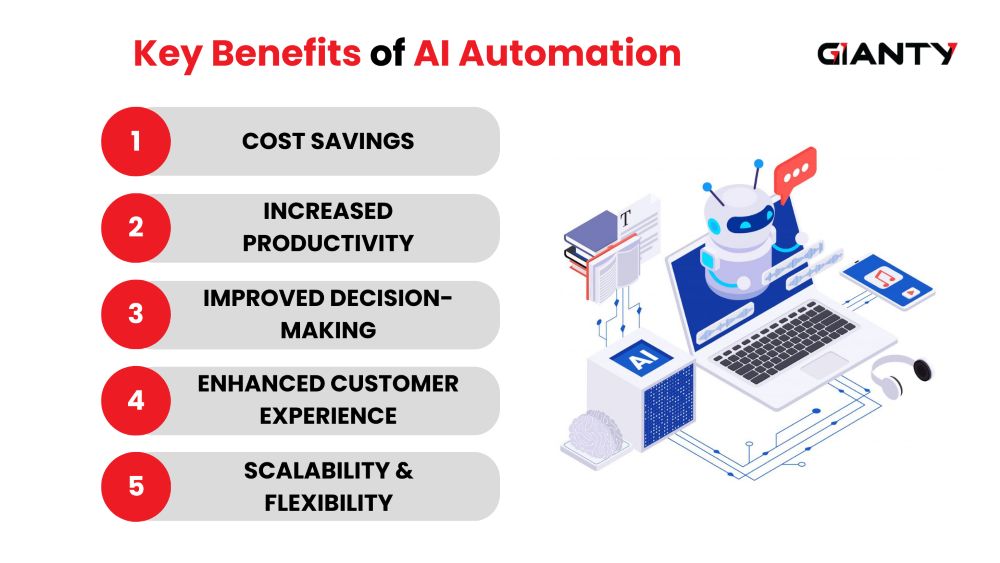
Below are the vital ones: Provides Scalability: AI automation readjusts conveniently as service requires expand. It utilizes cloud sources and artificial intelligence designs that increase capacity without extra hands-on job. Supplies Speed: AI models (or tools) process information and react immediately. This allows faster service delivery and reduces delays in operations.
The Significance of Authority in [a:specialty] Auto glass
Organize the data to fit the AI technique you intend to use. Select Formula: Pick the AI algorithm ideal suited for the trouble.
This aids check if the AI design learns well and does properly. Train Version: Train the AI design utilizing the training information. Check it repetitively to boost precision. Integrate Model: Integrate the qualified AI design with the existing software application. Examination Model: Evaluate the incorporated AI design with a software program application to make certain AI automation functions properly.
Health care: AI is used to predict illness, handle patient records, and deal customized diagnoses. Manufacturing: AI forecasts tools failures and manages quality checks.
It aids forecast need and established dynamic prices. Sellers additionally make use of AI in storehouses to streamline stock handling. AI automation functions best when you have the right devices developed to manage particular jobs.
Issues When Hiring an Auto glass Partner for Wellness Providers
ChatGPT: It is an AI device that assists with jobs like composing, coding, and responding to questions. ChatGPT is made use of for drafting e-mails, summing up message, producing ideas, or resolving coding problems.

Latest Posts
Determining the Optimal Development Architecture for Your Organization Objectives
Evaluating Auto glass Budget for Counseling Practices
Natural Language Strategy for [a:specialty] Practices